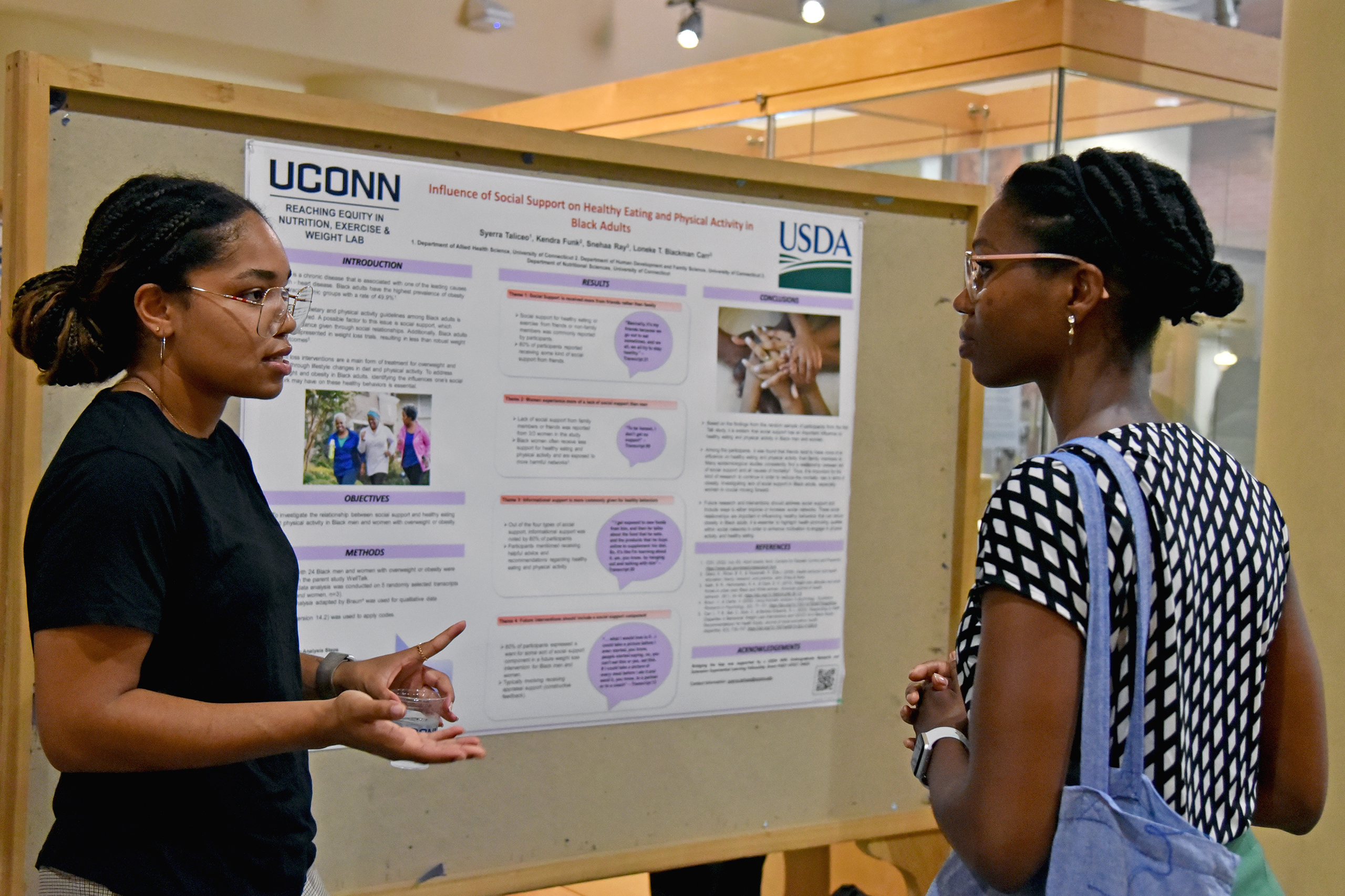
Master of Science
Earning a Master of Science in Nutritional Sciences at UConn opens the door to advanced study, research training, and professional growth in a field connected to human health and well-being. Guided by faculty mentors, students build expertise in nutritional science while developing the research, analytical, and communication skills needed for meaningful careers. Whether students plan to pursue a Ph.D., enter industry, work in public health, or continue in a health-related profession, the program provides a strong foundation for future impact.

Program Overview
The MS in Nutritional Sciences reflects the depth and diversity of the department’s faculty expertise.
Potential areas of specialization may include:
- Biochemical and Molecular Nutrition
- Human Nutrition and Metabolism
- Community/Public Health Nutrition
- Food Science/Nanotechnology
Graduate students work closely with a faculty advisor to design a plan of study that integrates advanced coursework, research, and professional development. Each student’s program is shaped around their interests and career goals while meeting Graduate School and departmental requirements. The department notes that all MS and Ph.D. programs require a thesis, dissertation, or expanded paper, along with appropriate graduate coursework and examinations.
Degree Requirements
Master of Science Plan A
Most MS candidates enroll in Plan A. To earn a Master of Science under Plan A, students must complete the following requirements.
Courses
UConn Requirements. For UConn requirements to graduate under Master Plan A, visit the Registrar’s Steps to a Successful Graduation Website and the UConn Catalog.
Department Requirements. The course work is designed to develop an advanced level of knowledge in nutrition and related sciences, and prepare the student for developing specific research competencies. [Placeholder for more information, if department deems necessary]
Thesis, Defense, and Final Examination
UConn Requirements.
For UConn requirements to graduate under Master Plan A, visit the Registrar’s Steps to a Successful Graduation Website and the UConn Catalog.
Department Requirements.
The thesis topic is selected by the student and the Major Advisor. Near the end of the course work phase, all MS students must successfully complete a comprehensive oral examination prepared by the Advisory Committee.
Timeline
Year 1
- Start research project
- Enroll in coursework
- Choose Advisory Committee members
- Submit Plan of Study to the Graduate School
Year 2
- Continue research project
- Complete coursework
- Complete comprehensive MS oral exam
- Complete thesis related requirements and presentations
Preparing to Graduate
Master of Science Plan B (Non-Thesis)
To earn a Master of Science under Plan B (Non-Thesis), students must have practical experience in the field of nutritional sciences and complete the following requirements.
Requirements
UConn Requirements. For UConn requirements to graduate under Master Plan B, visit the Registrar’s Steps to a Successful Graduation Website and UConn Catalog.
Department Requirements. This program requires that each student complete a minimum of 30 credits and pass the comprehensive MS examination. The MS examination for plan B students consists of a written term paper and oral presentation to their Advisory Committee.
Timeline
Year 1
- Enroll in coursework
- Choose Advisory Committee members
- Submit Plan of Study to the Graduate School
Year 2
- Complete coursework
- Complete comprehensive MS oral exam
- Successfully complete final examination*
- *Final examination can be either a capstone paper or a presentation on a capstone project (can be a literature review, with at least the presence of the committee)
Preparing to Graduate
Admissions
Applicants should refer to the Graduate School for deadlines.
More Information
Questions?
For more information about the MS or Ph.D. programs in Nutritional Sciences, please contact Yangchao Luo yangchao.luo@uconn.edu